
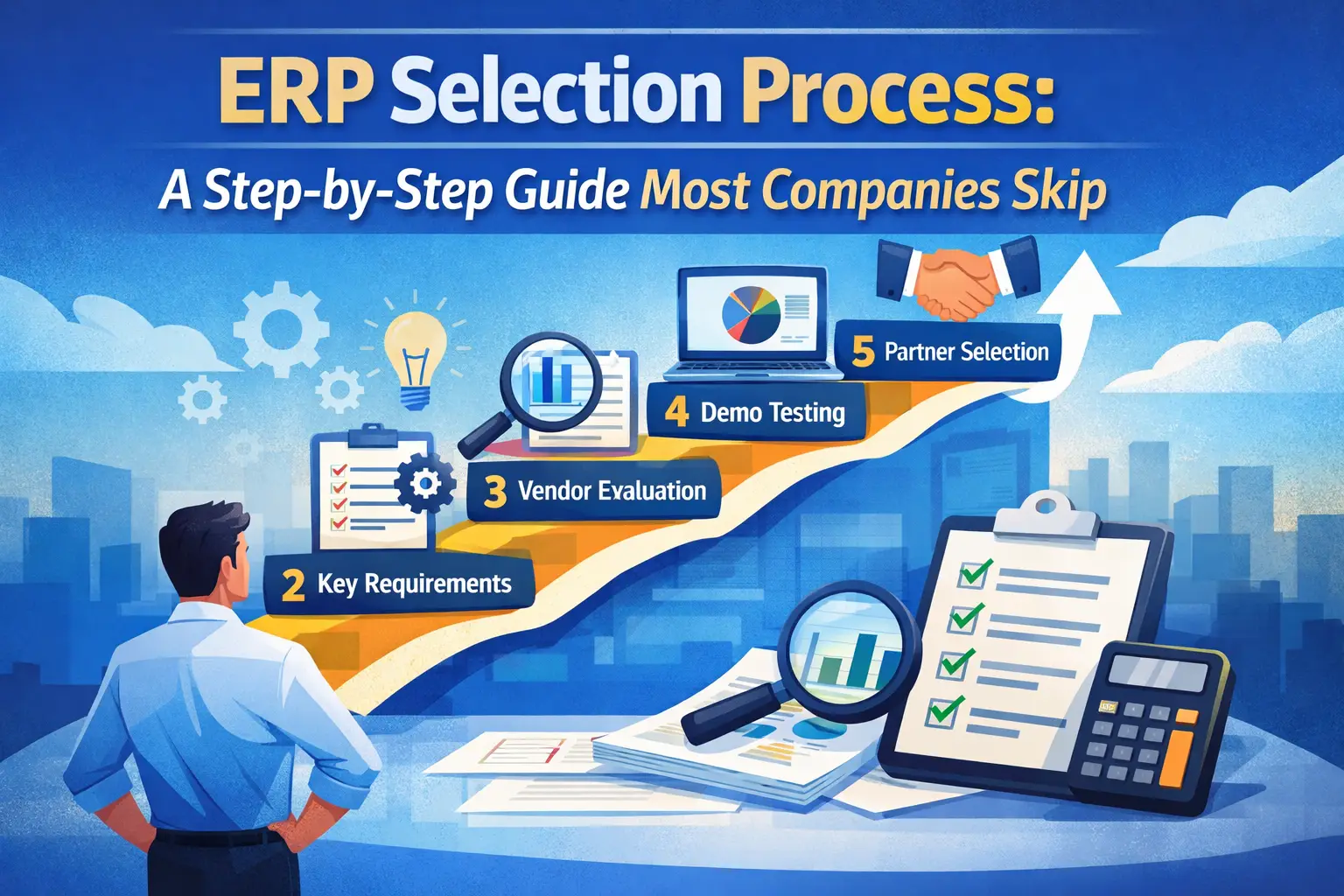
Why I Wrote This Blog
I wrote this blog because I keep seeing the same story repeat itself.
I see companies investing heavily in ERP software, attending impressive demos, and signing contracts with confidence—only to feel confused, frustrated, or disappointed a year later.
In my opinion, the problem is rarely the ERP itself.
The real issue is how the ERP was selected.
Most ERP content online talks about features, comparisons, or vendor rankings. Very little talks about decision clarity, organizational readiness, or what really happens inside a company after ERP goes live.
This blog exists to fill that gap.
It’s written for leaders and teams selecting an ERP system for the first time—and want to do it thoughtfully, realistically, and without regret.
Why This ERP Selection Framework Works
In my experience, ERP selection frameworks fail when they are:
- Too technical
- Too vendor-driven
- Too theoretical
This framework works because it is built from real ERP journeys, not ideal ones.
I’ve seen ERP succeed in companies that were not perfect—but were clear.
And I’ve seen ERP struggle in companies that bought powerful systems—but avoided hard conversations.
This framework works because:
- It starts with business reality, not software
- It forces clarity before demos
- It treats ERP as an operating discipline, not a tool
- It recognizes that people and ownership matter more than features
That’s why each step is practical, sequential, and grounded in how ERP actually behaves in the real world.
Why ERP Selection Is So Often Misunderstood
I see ERP selection treated like a procurement exercise.
Compare vendors.
Evaluate features.
Negotiate pricing.
Sign the deal.
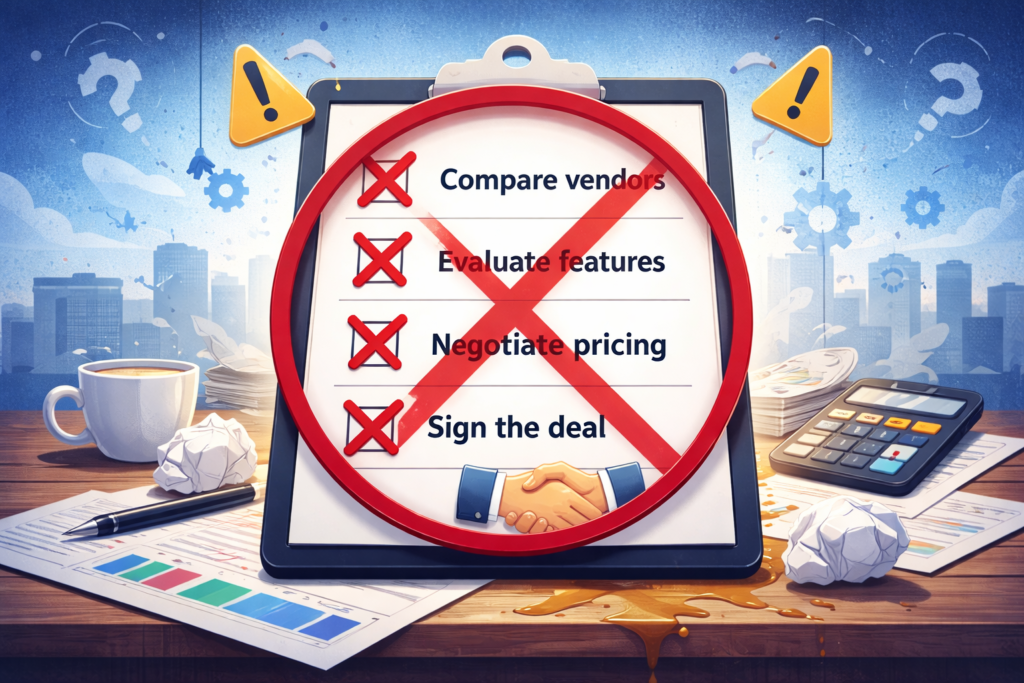
But in my opinion, ERP is not something you “buy.”
It’s something you invite into the core of your business.
Once ERP is live, it decides:
- How work flows
- How mistakes surface
- How performance is measured
- How transparent the organization becomes
That’s why ERP selection deserves more thought than it usually gets.
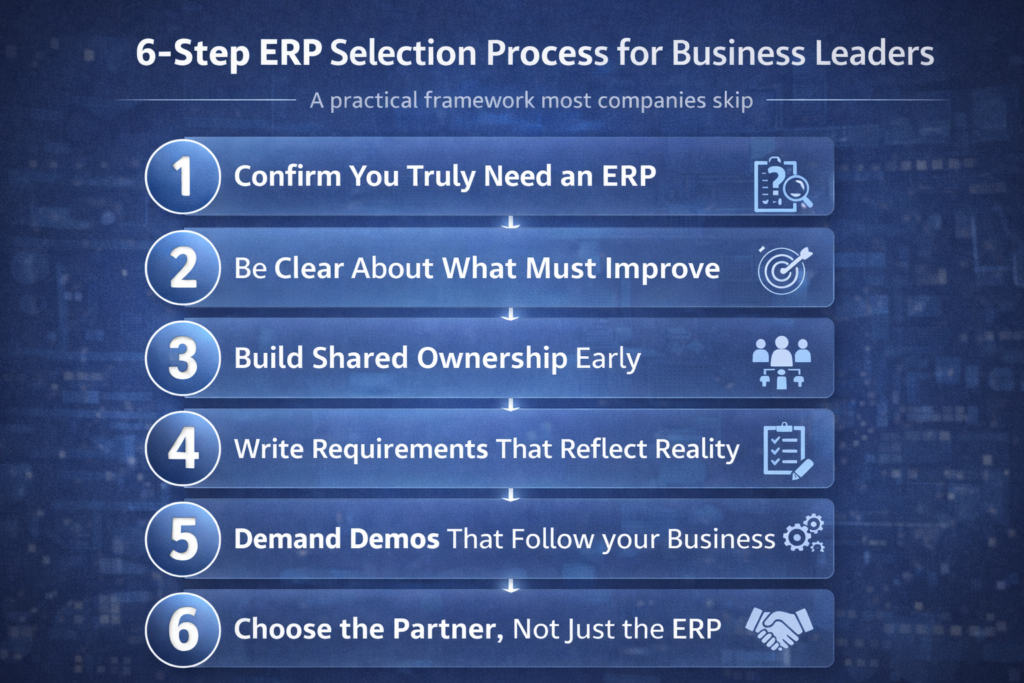
Step 1: Confirm You Truly Need an ERP
In my experience, companies don’t wake up one day and decide, “Let’s buy an ERP.”
ERP becomes necessary when cracks start to show.
I see this moment clearly when:
- Teams stop trusting numbers
- Spreadsheets multiply instead of simplifying
- Decisions take longer, even though the business is growing
- People rely on experience instead of data
In my opinion, ERP becomes essential when growth creates complexity that informal systems can no longer absorb.
This step matters because selecting ERP too early creates resistance—and selecting it too late creates chaos.
Step 2: Be Clear About What Must Improve
One thing I see again and again is teams starting ERP selection with modules.
Finance module.
Inventory module.
Manufacturing module.
But every ERP has modules.
What really differentiates success is clarity around what must improve after ERP goes live.
In my experience, ERP delivers value only when it is tied to outcomes like:
- Better inventory accuracy
- Faster and cleaner financial closes
- Predictable delivery commitments
- Clear visibility into margins and costs
In my opinion, if you can’t describe what should look better six months after ERP, no demo will save the project.
Step 3: Build Shared Ownership Early
I’ve seen ERP fail when it belongs to “someone else.”
IT thinks the business owns it.
Business thinks IT owns it.
Leadership assumes it will “work itself out.”
It never does.
In my experience, successful ERP selection happens when:
- Finance, operations, and IT are equally involved
- One executive owns outcomes—not just approvals
- Decisions are made collectively, but accountability is singular
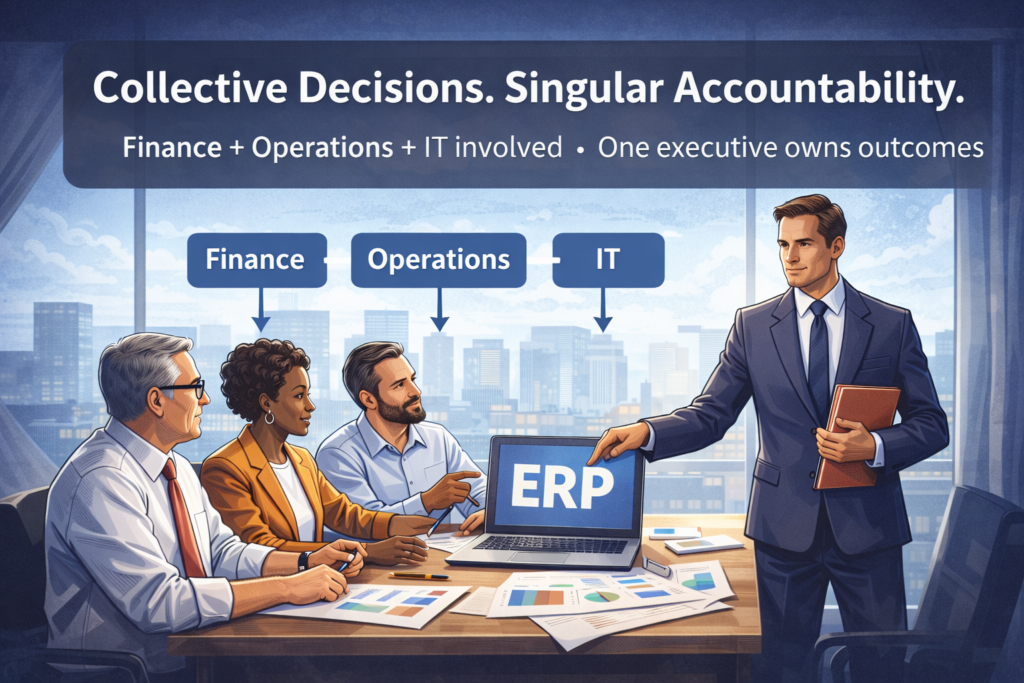
ERP exposes silos.
Selection should break them early.
Step 4: Write Requirements That Reflect Reality
I’ve reviewed requirement documents that were hundreds of pages long—and completely disconnected from how the business actually runs.
I’ve also seen short, focused requirement documents that saved months of rework.
In my opinion, good ERP requirements are not exhaustive—they are honest.
They describe:
- How work really happens
- Where exceptions occur
- Where controls are weak
- Where manual effort hides risk
ERP doesn’t struggle with ideal processes.
It struggles with real ones.
Step 5: Demand Demos That Follow Your Business
I see many companies impressed by clean demos.
But demos are rehearsed.
Businesses are not.
In my experience, the most valuable demos are uncomfortable ones—where vendors are forced to navigate:
- Shortages
- Changes
- Corrections
- Exceptions
- Reporting after real transactions
In my opinion, if a demo only shows success paths, it is hiding future pain.
ERP must survive real-world friction.
Step 6: Choose the Partner, Not Just the ERP
This is where I see the biggest blind spot.
Companies spend months selecting software—and days selecting the partner.
In my experience, this is backward.
The same ERP system can:
- Enable discipline and clarity
- Or amplify confusion and resistance
The difference is execution.
In my opinion, a strong implementation partner does more than configure screens.
They challenge assumptions, enforce structure, and guide change.
ERP success is not about power.
It’s about how responsibly that power is introduced.
ERP Is a Mirror
In my experience, ERP doesn’t create problems—it reveals them.
It shows:
- Where ownership is missing
- Where processes are unclear
- Where accountability is avoided
But it also shows:
- Where discipline exists
- Where teams collaborate
- Where leadership is aligned
In my opinion, the goal of ERP selection is not to find the “best” system.
It is to select a system that your organization is ready to work with, honestly.
Important Note:
This article is published for educational and informational purposes only. It reflects general industry experience and does not constitute legal, financial, or implementation advice.
ERP outcomes vary significantly based on organizational readiness, process maturity, data discipline, and leadership involvement.
Readers should evaluate their own business context and consult qualified professionals before making ERP selection or implementation decisions.
All product names, trademarks, and company names mentioned are the property of their respective owners and are used solely for identification and educational discussion.