
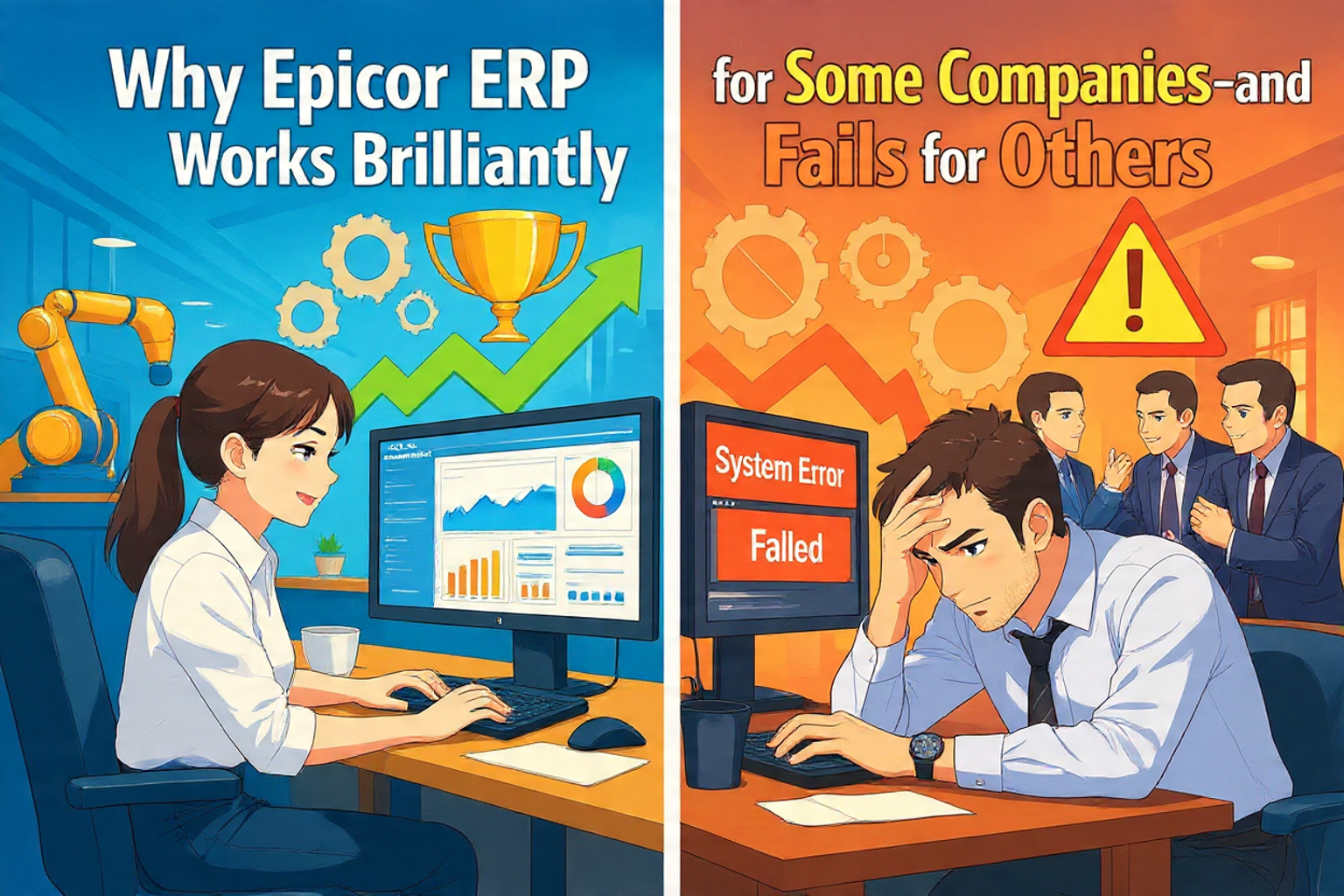
A CEO-level breakdown of Epicor ERP fit, cost drivers, and implementation risk—without vendor hype.
Most ERP decisions are made under pressure. I observed that finance teams often lack visibility into their data. I notice that operations heavily rely on spreadsheets for their processes. I hear that leadership desires the ERP system to provide better control. In this context, Epicor ERP demonstrations can appear quite impressive. However, many Epicor ERP implementations continue to face challenges even after going live.
But the truth is simple.
Epicor ERP is widely used in manufacturing and distribution,
But its success depends more on organizational readiness than on software features.
ERP does not work in an organizational environment. ERP will fail if the organization is not the right fit for ERP.
Epicor ERP is a strong platform—especially in manufacturing and distribution—
I see that the approach delivers results. The approach works when the organization is ready for structure.
ownership, and disciplined execution.
ERP is not automation. ERP is standardization.
Over the years, I’ve watched standardization bring control, predictability, and visibility.
I’ve also watched it create discomfort—because transparency increases, accountability becomes real, and shortcuts disappear.
Epicor is powerful because it makes processes explicit, and that clarity helps people work better.
What Epicor ERP Really Is (Beyond the Marketing Line)
Epicor ERP is an enterprise resource planning system. Epicor ERP runs the operations of a business, not just finance.
- Manufacturing planning (MRP), scheduling, and shop-floor execution
- Inventory and supply chain control
- Costing and operational-to-financial traceability
- Multi-site and multi-company management
When a business makes, moves, or sells products, I’ve learned that ERP is not just a software tool.
It becomes the operating system of the business.
And when it’s implemented correctly, ERP works.
ERP is “standardization” before “automation.”
I have seen many leaders buy ERP expecting automation. I see that they want ERP to require people to cause fewer errors and to finish the work faster.
ERP can support the outcomes. ERP can do that after a basic change happens.
Who Epicor ERP Is a Strong Fit For
I think Epicor ERP fits a company that has complexity in its work. I think Epicor ERP also fits a company that wants to grow while keeping control.
Epicor performs well when you need strong capabilities in:
- Bills of materials (BOMs)
- Routings and operations
- Work-in-process and job costing
- Material planning and procurement discipline
If the planning accuracy, the inventory visibility, and the delivery performance matter to your profitability, then Epicor’s operational strengths are very important. Epicor’s operational strengths help you keep the planning accuracy, the inventory visibility, and the delivery performance in line with your profitability. I have seen Epicor’s operational strengths make a difference.
Growing Companies That Have Outgrown “Accounting-First” Systems:
Many organizations start with accounting systems plus spreadsheets. That works until complexity increases:
- More SKUs
- More locations
- More warehouses
- More departments
- More inter-company transactions
- More compliance demands
I have seen Epicor be a step when the leadership wants a single system that can link the operational reality to the financial reporting. Epicor can bring the two together. The leadership can count on Epicor to connect the operations with the financial reports.
Organizations Ready to Improve Process Discipline
For businesses that want software that can adjust to chaos, Epicor isn’t the greatest option, in my opinion. Additionally, it was found that Epicor works best for companies that are ready to:
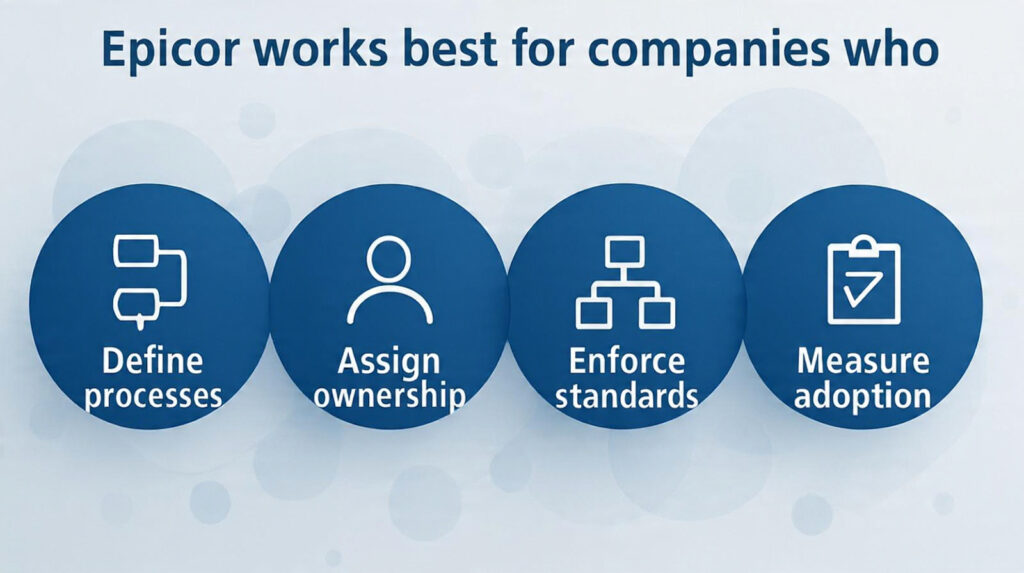
If the leadership is ready to treat ERP as the business operating model, Epicor becomes the tool that makes execution happen. The leadership can see Epicor drive the work.
Who Should NOT Use Epicor ERP (or Should Delay It)
You Want “Plug-and-Play” with Minimal Change
Epicor ERP is configurable and flexible, but it still requires:
- Process definition required
- Disciplined data entry
- Structured roles and permissions
- Testing and validation
I think if leadership wants disruption and expects the ERP to just work, Epicor will feel heavy. In that case, a lighter system or a phased readiness program prior to ERP is typically the best ERP.
Leadership Is Not Available for Decisions
I have seen that ERP projects do not fail because teams are lazy. They fail because decisions are delayed. Epicor implementations require decisions on:
- Process rules
- Master data definitions
- Approval flows
- Reporting ownership
- Customization limits
I noticed that when executives and process owners are not available to decide, the project goes off track. I see that the scope grows. I see that the costs rise. I also see that Epicor’s complexity makes avoiding decisions more expensive.
Your Data Discipline Is Weak (and No One Owns It)
Epicor depends on trustworthy master data:
- Parts
- Customers/Suppliers
- Units of Measure
- Lead times
- BOM structures
- Costing methods
If your organization has no clear data owners and no discipline to maintain clean data, the ERP will produce outputs that users don’t trust—especially MRP and costing. That quickly leads to spreadsheet workarounds and adoption failure.
The Organization Avoids Accountability and Transparency
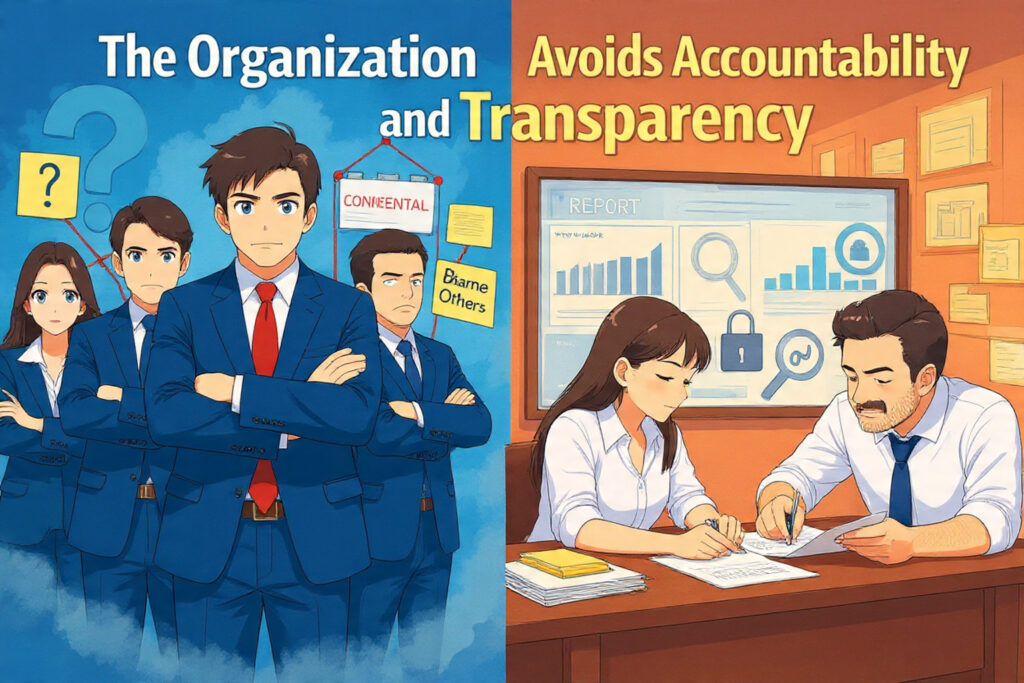
ERP gives the company visibility:
- Who approved what
- What was delivered late
- Where variance occurred
- What inventory accuracy looks like
I see that if the culture is built on working and hidden fixes and an approach that lets this be managed manually, the ERP becomes a threat. Epicor will make the friction visible. The leaders must decide. The leaders must ask if the leaders want visibility and control or comfort.
You Expect Customization to Preserve Old Habits
I notice a failure pattern when the team uses customization to keep the legacy processes alive. Using customization to keep the legacy processes increases:
- Project complexity
- Testing load
- Upgrade friction
- Long-term support cost
You can customize Epicor. The customization should be planned. I have seen that if the organization’s default response to discomfort is “customize it,” Epicor becomes a maintenance burden.
A Practical Executive Checklist
If you want to make a wise decision, don’t ask, “Is Epicor good?” Ask, “Is Epicor good for us now?”

I have a checklist that I use for serious ERP selections. The practical checklist helps keep the ERP selections organized.
A) Business Readiness
- Do we have clear owners for key processes (finance, supply chain, manufacturing, sales)?
- Can we enforce standardized processes across departments?
- Are leaders prepared to remove workarounds (spreadsheets, offline approvals)?
B) Operational Complexity
- Do we need manufacturing planning, job costing, MRP, or multi-warehouse control?
- Is inventory accuracy directly impacting cash flow and customer delivery?
- Do we require traceability from operations to financial outcomes?
C) Governance Capability
- Can we run a decision forum with the authority to make a decision?
- Can we control scope and customization with a strong change process?
- Can we allocate time for testing, training, and reinforcement of adoption?
If most answers are “yes,” Epicor is likely worth serious consideration.
What Epicor Is NOT (So Expectations Stay Realistic)
To prevent misaligned expectations, it helps to be explicit about what Epicor will not do.
Epicor:
- Will not fix broken processes automatically
- Will not create adoption without leadership
- Will not replace accountability
- Will not produce accurate forecasts with bad data
ERP is a multiplier. Strong discipline becomes stronger. Weak discipline becomes more visible.
The Smart Path: Epicor as a “Phased Maturity Program”
If Epicor is the right destination but your organization is not fully ready, the best approach is phased:
1) Readiness & discovery—(process ownership, master data cleanup, governance setup)
2) Core implementation—(finance + core operations)
3) Stabilization—(adoption, confidence, reporting discipline)
4) Optimization—(advanced planning, dashboards, automation, integrations)
This reduces risk while building a sustainable operating model.
Final Executive Takeaway
Epicor ERP is not “too complex.” It is structured.
If your business needs operational depth and your leadership team is ready to standardize how work gets done, Epicor can become a serious competitive advantage. If your organization is looking for a quick fix, minimal change, or leadership-light implementation, Epicor will likely disappoint—not because the software is weak, but because ERP success requires disciplined ownership.
Important Note :
This article is published for educational and informational purposes only. It reflects general industry experience and does not constitute legal, financial, or implementation advice.
ERP outcomes vary significantly based on organizational readiness, process maturity, data discipline, and leadership involvement.
Readers should evaluate their own business context and consult qualified professionals before making ERP selection or implementation decisions.
All product names, trademarks, and company names mentioned are the property of their respective owners and are used solely for identification and educational discussion.